Bitkom Survey 2026: For the First Time, More Than Half of Germans Read E-Books
According to Bitkom, more than half of Germans read e-books for the first time in 2026: 55 percent, after 51 percent the year before. The group aged 65 and over is growing particularly strongly. People who read e-books also buy them more often and spend more, while borrowing is declining. We put the figures of the representative survey in context.
This page has been translated from German.
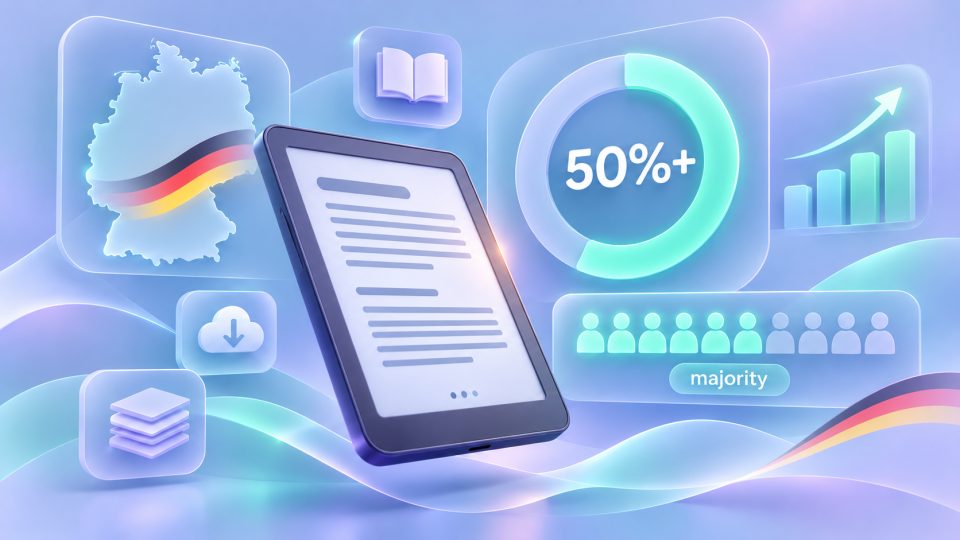
Digital reading has arrived in the middle of society: according to a current survey by the digital association Bitkom, 55 percent of people in Germany read e-books at least occasionally. That is the first figure above the 50 percent mark; last year it was 51 percent. We summarize what is behind the numbers.
How many Germans read e-books?
55 percent of respondents aged 16 and older read e-books at least occasionally, and 85 percent read books in some format. Usage breaks down like this:
| Group | Share |
|---|---|
| Read e-books at least occasionally | 55 percent |
| Read only e-books | 4 percent |
| Read e-books and printed books | 51 percent |
| Read only printed books | 30 percent |
The mix is the real pattern: the vast majority of e-book readers still reach for paper as well. Of the 51 percent who use both formats, 19 percent read e-books more often, 17 percent both about equally often and 15 percent printed books more often. Bitkom expert Sebastian Klöß sums it up: "The e-book for on the go, the printed book at home."
Are only the young reading digitally?
No, the older generation in particular is catching up. Among respondents aged 65 and older, 42 percent now read e-books; last year it was 33 percent. Among 16 to 29 year olds the figure is 64 percent. The gap is still there, but it is shrinking. According to Klöß, digital reading has long stopped being a question of age.
One possible explanation is simple, large and well lit reading devices. If you are planning to start, you will find orientation in our guide Digital bookshelf and in the directory of eBook readers.
Buy or borrow: what do e-book readers do?
Among e-book readers, 89 percent buy their books; last year it was 81 percent. Buyers spend an average of 12.40 euros per month, previously it was 11.10 euros, about 12 percent more. Borrowing, on the other hand, is falling: 46 percent borrow e-books, after 54 percent the year before. Those who borrow spend an average of 6.80 euros per month on it, and 15 percent use free e-books.
That borrowers spend money is due to offers like subscriptions and lending services. At public libraries, the Onleihe is usually covered by the annual fee. How that works is explained in E-book libraries in Germany.
How should the survey be assessed?
The figures come from a representative telephone survey by Bitkom Research among 1,006 people aged 16 and older, conducted in calendar weeks 28 to 32 of 2026. Bitkom published it shortly before the Frankfurt Book Fair. Important for context:
- Usage, not revenue: the survey measures how many people read e-books, not how much money is made with them. Revenue in Germany is stagnating, as we describe in our analysis of the e-book market development.
- Self reporting: respondents classify themselves. Social desirability can slightly inflate the figures.
- Sample: 1,006 people is solid for Germany, but subgroups such as the 65 plus age group are accordingly smaller.
What does this mean for you?
If you already read e-books, you are no longer an exception, but part of the majority. If you are still hesitating, the numbers suggest: start small, for example with an e-book from the library, and see whether you like reading on a screen. Our guide Digital bookshelf helps with the first steps.
Frequently asked questions
How many Germans read e-books in 2026?
55 percent read e-books at least occasionally. 4 percent read only e-books, 51 percent a mix of e-books and printed books, and 30 percent only printed books.
How much do e-book readers spend?
Buyers spend an average of 12.40 euros per month, about 12 percent more than the year before. Borrowers spend an average of 6.80 euros per month.
Who reads e-books most often?
Among 16 to 29 year olds, 64 percent read e-books. The strongest growth is among people aged 65 and older with 42 percent, after 33 percent the year before.
How often do e-book readers borrow?
46 percent borrow e-books, after 54 percent the year before. 15 percent use free e-books.
How reliable are the Bitkom figures?
They come from a representative telephone survey among 1,006 people aged 16 and older, conducted in calendar weeks 28 to 32 of 2026.